International Solidarity and Pre-War Conflicts
The 1850s opened with the collapse of every political compromise that had attempted to contain slavery since the founding. The Mexican-American War (1846–48) had added vast new territory to the United States, immediately raising the explosive question of whether slavery would expand westward. The Compromise of 1850 attempted to patch the system together, but its centerpiece — the Fugitive Slave Act — radically nationalized the policing of Black freedom. Under the Act, any Black person in the North could be seized, denied a jury trial, and sent south on the word of a white claimant. Federal marshals were compelled to aid slave catchers, and ordinary citizens could be fined for refusing to help (Foner, 2015).
The Fugitive Slave Act enraged free Black communities, empowered white vigilantes, and convinced many Northerners that the federal state itself had become an arm of slave power. Abolitionists described the United States as one vast slave-hunting ground, and acts of resistance — from vigilance committees in Boston to mass mobilizations in Wisconsin — foreshadowed the militant confrontations to come. As Eric Foner documents, the law’s enforcement transformed the sectional crisis from an abstract debate about western territories into a daily, visible confrontation with the machinery of slavery operating in Northern cities (Foner, 2015).
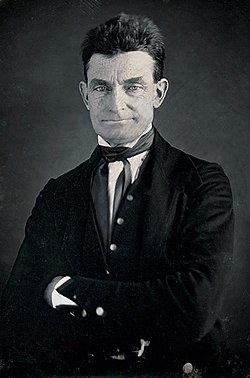
John Brown’s worldview hardened in the 1850s as he watched the federal government increasingly serve the interests of slaveholders. Brown came to believe that slavery was a war being waged daily on Black people, and that antislavery activists had a moral obligation to resist with equal resolve. After the passage of the Fugitive Slave Act, Brown moved to the outskirts of Black communities in upstate New York and Canada, helping operate what he called a “Subterranean Pass-Way” to free fugitives. Black abolitionists such as Frederick Douglass, Shields Green, and Harriet Tubman respected Brown not simply because he opposed slavery, but because he treated them as full political partners and co-strategists. As W.E.B. Du Bois wrote in his 1909 biography, Brown was a man whose leadership lay not in wealth or office but in his total commitment to an ideal — a white man who grasped what most white Americans refused to see: that slavery was not a political problem but a moral catastrophe requiring revolutionary action (Du Bois, 1909).
Brown’s time in “Bleeding Kansas” cemented his conviction that slavery would never fall through elections or moral suasion alone. The Kansas-Nebraska Act of 1854 opened new territories to slavery under the fiction of “popular sovereignty,” and produced a bloody proxy war. Proslavery “Border Ruffians” from Missouri flooded Kansas to stuff ballot boxes, intimidate Free Soil voters, and terrorize settlers who opposed slavery’s expansion. They burned antislavery towns like Lawrence and destroyed printing presses. Kansas became proof that self-determination under a slaveholding republic meant violence, fraud, and federal complicity. Brown saw the conflict not as isolated frontier disorder but as the true face of a national system willing to use force to protect slavery. His controversial Pottawatomie raid in 1856 — where he and his men killed five proslavery settlers — was, in his mind, a preemptive strike in a civil war already underway. Du Bois argued that Brown alone “saw the inevitable,” recognizing that only revolutionary struggle could break a system so deeply embedded in law, economics, and white supremacy (Du Bois, 1909).
Brown’s eventual plan to seize the federal arsenal at Harpers Ferry in 1859 — coordinated with Black activists and intended to spark a mass uprising of the enslaved — was the logical end of a decade in which every peaceful avenue had been foreclosed by courts, Congress, and mobs. Working closely with allies like Osborne Anderson, Dangerfield Newby, and Harriet Tubman, Brown envisioned a long guerrilla campaign: attack the arsenal, arm enslaved people, retreat into the Appalachians, and establish a chain of liberated zones stretching southward. On the night of October 16, 1859, Brown and 21 men captured key buildings in Harpers Ferry, cut telegraph wires, and took hostages, but they hesitated too long. By morning, townspeople and militia had surrounded them, and U.S. Marines commanded by Robert E. Lee stormed the engine house where Brown made his final stand.
Osborne Anderson — a free Black man from Pennsylvania and the only surviving Black participant in the raid — later wrote the sole insider account of what happened, correcting the white press’s narrative and insisting on the courage, purpose, and dignity of the raid’s Black members. Anderson documented the responses of enslaved people in the surrounding area, who showed what Du Bois later confirmed: that they understood what Brown was attempting and that many were ready to rise (Anderson, 1861; Du Bois, 1909).
Even in defeat, Brown’s words electrified the nation. On the gallows he declared that the crimes of this guilty land would never be purged away but with blood. His raid fractured the already failing political order. Enslaved people celebrated him, Southern elites panicked, and Northern abolitionists debated strategy. The nation stood on the brink, and Brown’s vision foreshadowed the massive struggle to come.
Lincoln, the GOP, and Emancipation
The Republican Party emerged in the mid-1850s from the collapse of the Whig Party and widespread Northern outrage over the Kansas-Nebraska Act. Antislavery Whigs, Free-Soilers, abolitionists, and Northern reformers united around a simple principle: slavery must not spread. While not all Republicans were abolitionists, the party insisted that free labor, not slave labor, should shape the future of the West. It should also be noted that Republicans largely favored the expropriation of Native land to enable white migration westward — the Homestead Act of 1862 distributed stolen Native territory to white settlers while the Civil War was being fought (Dunbar-Ortiz, 2014). By 1856 the GOP had built a mass political movement blending economic modernization, Northern nationalism, and rising antislavery sentiment.
The Republican coalition was broad and internally divided. Some members demanded immediate abolition everywhere; others, like Lincoln, focused on preventing slavery’s expansion, trusting that containing the institution would place it in the course of ultimate extinction. Radical Republicans like Charles Sumner and Thaddeus Stevens criticized Lincoln for excessive caution. Conservative Republicans worried that attacking slavery would alienate moderate Northern voters and border states. Lincoln’s appeal came precisely from his ability to bridge these divisions — which meant, in practice, that enslaved people’s freedom was subordinated to white political arithmetic.
The election of 1860 occurred amid the worst sectional crisis in the nation’s history. The Democratic Party fractured along regional lines, allowing Lincoln to win with less than 40 percent of the popular vote. Lincoln entered office insisting he had no intention or constitutional authority to interfere with slavery where it already existed. His priority was preserving the Union. He also seriously pursued plans for colonization — the deportation of freed Black people to Central America or the Caribbean — a proposal that revealed the limits of his vision for a racially integrated republic (Kimberley, 2020). Black leaders, including Frederick Douglass, rejected colonization categorically, insisting that African Americans had as much claim to the United States as anyone.
Southern secession forced Lincoln’s hand. When he attempted to resupply Fort Sumter in April 1861, Confederate forces opened fire, dragging the nation into full-scale war. But as W.E.B. Du Bois demonstrated in Black Reconstruction in America, the course of that war was decisively shaped not by Lincoln’s proclamations but by the actions of enslaved people themselves. Beginning in 1861, hundreds and then thousands of enslaved men, women, and children abandoned plantations and fled to Union lines — what Du Bois named the “general strike.” They did not wait for legal freedom; they seized it, withdrew their labor from the Confederate war effort, and forced the Union to confront the question of what to do with the people it was liberating. The Emancipation Proclamation of January 1, 1863 did not create this movement — it ratified it (Du Bois, 1935).
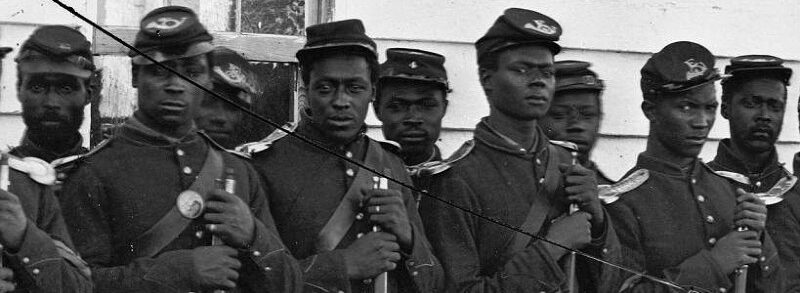
Lincoln’s Emancipation Proclamation, issued as a war measure after the Union victory at Antietam, declared enslaved people in rebelling states forever free. It was deliberately limited — it did not apply to border states or areas already under Union control — and it was designed as much to weaken the Confederate war effort and prevent European intervention as to advance human freedom. But as Du Bois insisted, the Proclamation opened the floodgates. Every advance of Union troops expanded the domain of freedom, and freed people flocked to Union lines or volunteered for service. By the end of the war, nearly 200,000 Black soldiers and sailors had fought for the Union — men who were, as Du Bois wrote, liberating themselves and their people, not waiting to be liberated (Du Bois, 1935; Foner, 1988).
Lincoln recognized that a proclamation alone could not secure permanent freedom. He pushed for the Thirteenth Amendment as part of his 1864 reelection platform, and secured reelection after major Union victories. To reassure moderate voters, Lincoln replaced his Republican vice president with Democrat Andrew Johnson — a decision that would have catastrophic consequences for Reconstruction following Lincoln’s assassination.
Native Americans in the Civil War
While Lincoln moved — slowly and reluctantly — toward emancipation for Black Americans, his administration simultaneously waged a campaign of violence and dispossession against Native peoples. These were not separate stories. They were the same story, told from different directions: a racial hierarchy being partially dismantled in one place while being violently enforced in another.
The Civil War years saw two of the most devastating assaults on Native peoples in U.S. history. In the fall of 1862, the Dakota people of Minnesota, facing starvation after the U.S. government failed to deliver treaty-promised food and supplies, rose in armed resistance. After six weeks of conflict, hundreds of Dakota men were captured and subjected to military tribunals so rushed that some trials lasted less than five minutes, with defendants who spoke no English and had no legal representation. A military commission sentenced 303 men to death. Lincoln reviewed the cases and approved the executions of 39, one of whom received a last-minute reprieve. On December 26, 1862 — six days before the Emancipation Proclamation took effect — 38 Dakota men were hanged simultaneously in Mankato, Minnesota, before a crowd of 4,000 spectators. It remains the largest mass execution in United States history (Dunbar-Ortiz, 2014).
Two years later, on November 29, 1864, Colonel John Chivington led 675 Colorado troops in an unprovoked dawn attack on a peaceful Cheyenne and Arapaho encampment at Sand Creek, Colorado. The village was camped under a white flag of truce and an American flag, with the explicit assurance of federal protection. Chivington attacked anyway, killing an estimated 150 to 200 people — the majority of them women, children, and elderly. His troops mutilated bodies and took scalps as trophies. As Roxanne Dunbar-Ortiz documents, Sand Creek was not an aberration or the act of a rogue commander; it was the logical outcome of a federal policy that treated the Civil War as an opportunity to accelerate the conquest of the West. The same generals who fought the Confederacy — Sherman, Sheridan, and others — were sent to the Plains with the same logic: that Indigenous peoples were obstacles to the expansion of the settler state (Dunbar-Ortiz, 2014).
Throughout the conflict, tribes in the Confederacy and in border territories saw their lands seized and their treaty rights nullified regardless of which side they had supported. The Civil War did not interrupt the dispossession of Native peoples — it accelerated it. The Homestead Act of 1862, the Pacific Railroad Acts, and the military campaigns of the war years together transferred vast swaths of Native territory to white settlers and corporations. For Native peoples, the Civil War was not a war about freedom. It was a war that expanded their conquest (Dunbar-Ortiz, 2014).
Aftermath: The Counter-Revolution of Property
The Civil War’s close in 1865 was both liberating and incomplete. The Thirteenth Amendment abolished slavery. Millions of Black Americans emerged from bondage with extraordinary determination: freedmen’s schools were founded by the thousands, Black churches flourished as centers of political and social life, and by 1868 roughly 80 percent of eligible Black men in the South had registered to vote. The Fourteenth and Fifteenth Amendments extended citizenship and, formally, the franchise. Black men were elected to Congress, to state legislatures, and to local offices across the South. As Du Bois insisted in Black Reconstruction in America, this was not merely social progress — it was “the finest effort to achieve democracy for the working millions which this world had ever seen,” a political revolution in which formerly enslaved people built public schools, hospitals, and democratic institutions in the ruins of the plantation system (Du Bois, 1935).
But the counter-revolution came swiftly. Du Bois named it precisely: not a failure of Reconstruction, but a deliberate and organized counter-revolution of property. Southern planters, Northern industrialists, and the Democratic Party united to destroy the political power that freed people had built. Black Codes were passed in the immediate aftermath of the war to restrict freedmen’s labor and movement — effectively recreating bondage under new legal forms. White supremacist terror organizations like the Ku Klux Klan launched systematic campaigns of murder, arson, and rape to drive Black voters and officeholders from public life. Thousands of Black people were lynched. The federal government, under Andrew Johnson and then under the exhausted Grant administration, steadily retreated from its commitment to protect Black citizenship in the South (Du Bois, 1935; Foner, 1988).
By 1877, federal troops were withdrawn from the South as part of a political bargain that resolved the disputed 1876 presidential election. Reconstruction was over. The promise of emancipation — land, education, political power, full citizenship — was systematically dismantled. Jim Crow laws, convict leasing, debt peonage, and disenfranchisement replaced the old slave codes. As Du Bois wrote, the problem was not that freed people were unprepared for freedom; the problem was that the nation was unwilling to pay the cost of actually dismantling white supremacy. The planter class lost the war but won the peace (Du Bois, 1935).
Conclusion
The Civil War abolished legal slavery — a revolutionary achievement won at enormous cost, driven above all by the self-activity of enslaved people themselves, the armed courage of Black soldiers, and the radical vision of abolitionists like John Brown and Frederick Douglass. But as Du Bois demonstrated, the abolition of slavery was not the same as the destruction of the racial hierarchy that slavery had built. That hierarchy required a second revolution — the equal distribution of land, education, and political power — and that revolution was defeated. The men and women who built freedpeople’s schools, who organized vigilance committees, who raided arsenals, who fled plantations and joined Union armies: they won the first revolution. The counter-revolution of property took back most of what they won.
For Native peoples, the Civil War era was unambiguously a period of intensified conquest and genocide. The same federal government that issued the Emancipation Proclamation on January 1, 1863 had hanged 38 Dakota men six days earlier. The same general who marched through Georgia was dispatched to exterminate the buffalo herds and starve the Plains peoples into submission. Freedom and genocide were not contradictions in the American racial order — they were coordinates of the same project (Dunbar-Ortiz, 2014; Du Bois, 1935).
What this chapter documents, read alongside the others in this book, is a consistent pattern: the racial hierarchy never gives way except under organized, sustained resistance — and it never gives way completely. Every gain must be defended. Every retreat is prepared. The struggles of the 1850s and 1860s — Brown at Harpers Ferry, the enslaved general strike, Black soldiers under fire, Dakota men singing on the scaffold, freed people building schools in the wreckage of the plantation South — were not failures. They were the foundation on which every subsequent struggle was built.
Bibliography
Anderson, Osborne P. A Voice from Harper’s Ferry: A Narrative of Events at Harper’s Ferry; with Incidents Prior and Subsequent to Its Capture by Captain Brown and His Men. Boston: Printed for the Author, 1861.
Dunbar-Ortiz, Roxanne. An Indigenous Peoples’ History of the United States. Boston: Beacon Press, 2014.
Du Bois, W.E.B. John Brown. Philadelphia: G. W. Jacobs, 1909.
Du Bois, W.E.B. Black Reconstruction in America: An Essay Toward a History of the Part Which Black Folk Played in the Attempt to Reconstruct Democracy in America, 1860–1880. New York: Harcourt, Brace and Company, 1935.
Foner, Eric. Gateway to Freedom: The Hidden History of the Underground Railroad. New York: W. W. Norton, 2015.
Foner, Eric. Reconstruction: America’s Unfinished Revolution, 1863–1877. New York: Harper & Row, 1988.
Kimberley, Margaret. Prejudential: Black America and the Presidents. White River Junction, VT: Steerforth Press, 2020.

This entry is licensed under a Creative Commons Attribution-NonCommercial-ShareAlike 4.0 International license.

